Stay Safe with Self Defense Classes condition1combat.com: What You’ll Learn
Self defense starts well before a punch is thrown. The best programs teach people to read distance, manage stress, make quick decisions, and move with purpose. That is the lens I bring when evaluating any training center, including a place that blends practical self defense with combat sports fundamentals like Condition 1 Combat Center. If you are considering self defense classes at condition1combat.com, here is what you can expect to learn, how it translates to real life, and why the curriculum benefits everyday people, not just athletes.
What self defense really means in practice
Ask ten students why they signed up and you will hear ten versions of the same story. A late walk from the parking garage. Uncomfortable body language on a first date. A push in a crowded line that escalated faster than expected. The goal of training is not to create brawlers. It is to reduce the likelihood of violence through awareness, then, if needed, to end a confrontation quickly and get home.
At a well run self defense program, you will learn to recognize pre-attack cues and manage the space between you and a potential threat. You will practice movement that keeps your hands free, your balance stable, and your eyes working. You will get comfortable with contact in a controlled way, enough that the shock of being grabbed or shoved does not freeze you.
Condition 1 Combat Center can draw from its pedigree as a mixed martial arts facility, which shows in how efficiently students learn body mechanics. Techniques are simple, repeatable, and rooted in leverage rather than brute strength. That is crucial for small-framed students and anyone who prefers certainty over improvisation.
The first lessons: stance, distance, and voice
Your first class will likely start on the feet. Coaches teach a stable stance that you can hold in sneakers on a wet sidewalk, not a stylized posture that only works on mats. You learn how to fence with your hands, palms up and visible, so your gestures read as de-escalatory while still protecting your head. From there, you practice moving in angles instead of straight lines. Angling off breaks eye contact just enough to lower tension while giving you an exit lane.
Coaches also work your voice. A strong, direct command can interrupt an approach and draw attention if you need help. It also helps you breathe. People hold their breath when they are scared, which fuels panic. Clear verbal cues help keep the diaphragm working and the brain online.
Striking that works under pressure
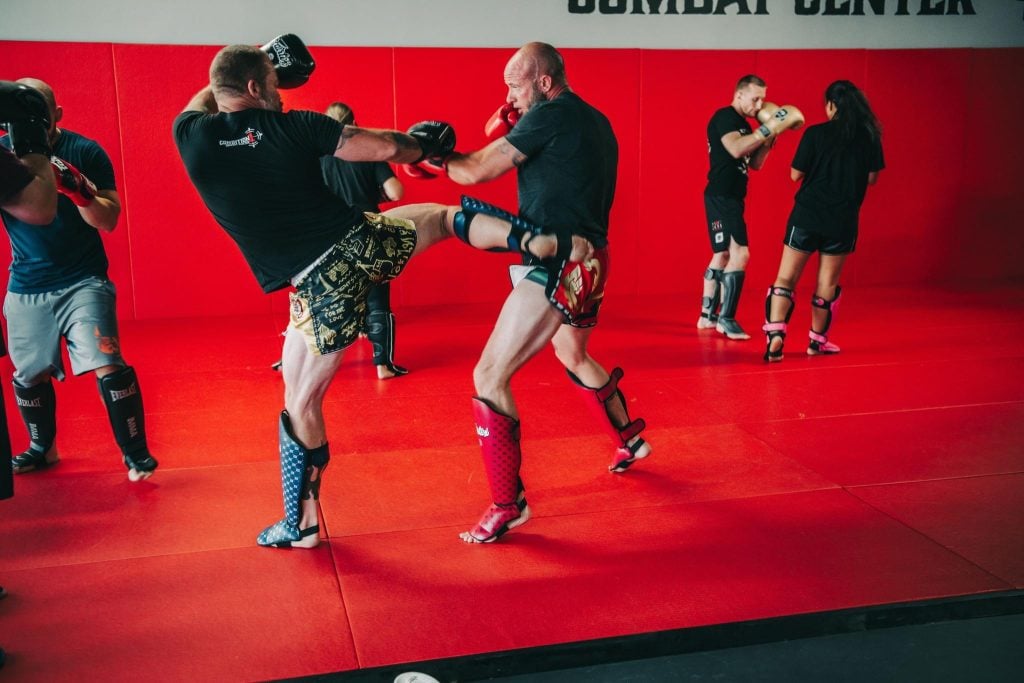
When a fight is unavoidable, simple strikes end it fastest. A program with ties to a muay thai gym and a boxing gym, like Condition 1 Combat Center, delivers useful tools without turning you into a ring specialist. You will practice:

- A compact jab and cross that start from your cheek and return to it, built for accuracy over power.
- Low-line kicks to the thigh or knee that disrupt balance without risking a slip.
- Elbows from close range, where most real altercations happen.
- Palm strikes that protect your hands while transferring force into the face and jaw.
None of this depends on fancy combinations. Coaches tend to drill single, decisive strikes and teach you to move immediately after contact. You will hear phrases like hit and get out or strike, frame, exit. The goal is not to chase. It is to buy time and space.
A student named Cameron once described how one session on palm strikes changed everything at work. A client got too close, blocked the exit with a shoulder, and kept stepping forward. Cameron did not hit him. She used the same hand position to frame on the chest, stepped to the side, and created a lane to leave. Training builds those small, automatic decisions.
Clinch control and escapes from grabs
Most people train punches. Fewer train what happens when someone latches onto your coat or wrist. This is where influence from Condition 1 Combat Center mma training helps, because clinch work is second nature to fighters and essential for non-fighters.
You will learn to pummel for inside control, an underhook that lets you turn a body, and a frame across the collarbone that gives you space to breathe. Simple defenses against hair grabs, two-on-one wrist controls, and bear hugs get drilled until they are reflexive. The mechanics are the same for everyone, but instructors adapt details for individual bodies. A shorter student might learn to level change and shrug under a grip. A taller student might post and pivot.
One drill I like takes a partner who grabs with two hands. You trap one hand with both of yours, twist your hips to load the elbow, and cut an angle that leaves the attacker off balance. Add a step to the exit and you have a clean pathway. Instructors do not speed this up until the technique is clean at half speed.
Ground safety, not sport
You do not need to become a competitor to benefit from Brazilian jiu jitsu. The best self defense programs focus on staying on top, standing up fast, and defending chokes. The aesthetics of combat center a bjj gym do not matter to the street. What matters is whether you can base, create distance with your frames, and build to your feet.
At a place that offers brazilian jiu jitsu training alongside striking, the ground curriculum will often include:
- Technical stand-ups, drilled until you can do them without thinking, even when tired.
- Guard retention and elbow-knee frames that keep heavy hips off your rib cage.
- Choke and headlock defenses that work with minimal strength.
- Escapes from mount and scarf hold that use timing and leverage.
Condition 1 Combat Center brazilian jiu jitsu training, integrated into a self defense framework, also teaches when not to go to the ground. Wet pavement, glass, multiple opponents, and footwear all argue for staying upright. That judgment is part of every class conversation.
Legal context and ethical restraint
Good self defense instruction includes boundaries. A quick overview of use-of-force principles helps students understand when a strike is justified, when to disengage, and how to talk to authorities if they must. Laws vary by state, which is why responsible coaches avoid giving legal advice and instead teach decision frameworks. For example, the idea that force must be proportional, necessary, and reasonable in context.
Roleplay helps here. Students practice saying clear, short phrases after an incident, like I was afraid for my safety, I want to cooperate, I need medical attention, and I would like to speak to counsel. This is not fear-mongering. It is the same preparedness mindset as packing a tourniquet or learning CPR.
Conditioning that carries over to real life
Conditioning for self defense looks different from a long road run or a bodybuilding split. It favors short, intense bursts with fast recoveries. You might do 20 seconds of bag work, a 10 second shakeout, and repeat for several minutes. Grip development shows up in towel hangs and clinch drills. Footwork gets baked into warmups, not saved for later.
Ties to mixed martial arts make this kind of conditioning second nature. The Condition 1 Combat Center mma gym approach builds engines without sacrificing technique. You get stronger, but more important, you get organized under stress. That matters. I have seen smaller students maintain clarity after a hard round while larger, stronger partners faded because they had never trained their breathing when adrenaline spikes.
Scenario training that respects reality
You cannot simulate a parking lot at noon in perfect fidelity, but you can get close enough to learn useful lessons. Quality programs run scenario rounds with clear constraints. One partner acts as a bystander, another as an aggressor. The student practices boundary-setting, exits, or engagement, then a coach pauses the round and explains what just happened.
An example: elevator drills. Students start with their backs to a wall, hands visible, speaking loudly but not aggressively. The aggressor crowds. The student manages distance with a forearm frame, exits on an opening, and only strikes if cornered. The point is not to win the fight but to exit cleanly. Afterward, instructors dissect foot placement, hand position, and the timing of the voice.
Gyms that teach for contact sports know how to manage intensity safely, which carries over here. Masks, helmets, and suits come out only as needed. You build from light, technical rounds to higher intensity, always with clear goals. This is where condition1combat.com mma training overlaps with real-life self defense: structure, feedback, and progressive pressure.
Tools and improvised weapons, simplified
Some classes touch on everyday objects. A metal water bottle as a striking tool, a backpack used as a shield, a jacket for entanglement. The best instructors do not make this a gimmick. They frame it as last-ditch options that require practice. If you cannot deliver a basic palm strike with balance, a pen in your hand does not fix the problem.
Edge cases are addressed honestly. Pepper spray sounds simple, but drawing it under stress is hard unless you have drilled the habit. The same goes for personal alarms. If a program chooses to cover these tools, it will usually reserve time for drawing, aiming, and moving after deployment, with legal and safety disclaimers.
How mixed martial arts ties in without taking over
A self defense class at a facility known for mma training, muay thai, or boxing can make people worry about getting pulled into sport-only drills. The good programs manage the balance. They borrow what works, skip what doesn’t.
From muay thai: balance, clinch knees, low kicks, elbows, and the ability to fight compact. From boxing: head movement, guard recovery, straight punches thrown from the chin, and footwork that finds exits. From jiu jitsu: positional control, frames, and escapes. From wrestling: takedown defense and the choice to stay standing.
Condition 1 Combat Center muay thai gym resources help you own the clinch line. The boxing gym side hones your jab and the habit of returning hands to guard. The bjj gym is where you rehearse your technical stand-up. The cross-pollination shows in how instructors coach. They aim for skills that require the least time to become reliable, then layer in options.
Safety culture and coaching quality
Beginners often ask about injuries. A good safety culture is obvious within five minutes. Partners ask about previous injuries before work. Coaches set contact levels and watch like hawks. Gear fits, mats are dry, and there is a procedure for head impacts. You will also see consistent warmups and cool downs that protect joints.
Coaching quality shows in the feedback. You want instructors who correct small things early, like where your eyes look during a frame or how your lead foot pivots on a jab. They do not flood you with ten cues at once. They prioritize one change per rep, maybe two. In my experience, the mma gym Condition 1 Combat Center approach helps instructors triage well, because fight coaches constantly rank problems by importance.
A clear sign of good coaching is how they handle questions that test dogma. If you ask, Why not kick higher, do they explain trade-offs in balance and time to recovery? If you ask about ground versus standing, do they give a framework that accounts for multiple attackers, footwear, and surface? Look for that intellectual honesty.
Building confidence without a hero complex
Real confidence is quiet. You do not need to posture once your nervous system trusts your body. Students often report an unexpected benefit after a month or two: their everyday posture changes. Shoulders set back slightly, eyes scan calmly, and they take corners a touch wider. These are micro habits that come from hours of footwork and guard positions.
One student I trained with used to clutch her keys in a fist every night. After two months of drilling exits and voice commands, she stopped. She still carried her keys. She just no longer counted on them as a talisman. She had tools and a plan.
Programs that keep students grounded talk openly about fear. They let you admit that certain scenarios still rattle you. Then they design a drill that moves the needle. Maybe it is dim lighting. Maybe it is noise. Maybe it is two partners switching roles mid-round. You do a few reps, you get better, and the fear gives up a little ground.
What progress looks like across 12 weeks
Progress can be measured in clean technique, faster exits, and better decisions. It also shows in how you recover. A new student might need a minute to catch their breath after a 30 second burst on the bag. By week six, they are back in position after ten seconds. By week twelve, they are making smart choices under moderate pressure.
In an mma training condition1combat.com environment, progress often follows this pattern:
- Weeks 1 to 4: learn stance, voice commands, basic strikes and frames, technical stand-up.
- Weeks 5 to 8: add clinch entries, grip breaks, choke defenses, and angled exits.
- Weeks 9 to 12: scenario rounds with progressive intensity, decision drills, light protective gear as appropriate.
Students with prior athletics sometimes move faster. Others need more reps. The timeline is not a race. What matters is reliability under stress.
How to prepare for your first class
A little preparation smooths the first week. Wear clothes you can move in, bring water, and arrive early enough to handle waivers without rushing. If you own a mouthguard, bring it, even for light drills. Coaches will tell you when to wear it. Some gyms offer loaner gloves for striking drills, but personal gear fits better and is more sanitary.
Here are a few simple tips that pay off fast:
- Trim nails and tie back hair to protect partners and avoid scratches.
- Avoid heavy jewelry and anything that can snag or cut.
- Eat a light snack an hour before class and hydrate earlier in the day.
- Tell the coach about past injuries so drills can be adjusted.
- Plan to observe the last 10 minutes in case class intensity ramps beyond beginner level.
Small habits like these show respect for the room and let you focus on learning instead of logistics.
Who benefits most, and how classes adapt
Self defense classes must serve a broad audience: students, nurses coming off night shifts, parents who want peace of mind, and older adults who care about balance and falls. The curriculum adapts.
For smaller-framed students, coaches emphasize leverage: a forearm frame on the collarbone, hip position in headlock escapes, and exits that do not demand long sprints. For larger students, the focus is on not overcommitting and managing adrenaline dumps. For older adults, footwork, posture, and safe get-ups take priority. You will see slow, precise reps with a focus on joints and breath.
There is a separate conversation for children and teens. Programs that work with youth make it clear that de-escalation and telling an adult are first options. If a teen must push a bully away, they learn short-range tools and exits, not big looping shots that get them in trouble at school. Parents appreciate that nuance.
The value of training at a mixed-discipline facility
Choosing a gym with depth matters. A place like Condition 1 Combat Center, which functions as a hub for multiple disciplines, gives you access to coaches who have tested their methods against resisting partners. That does not mean you need to spar hard. It means the mechanics underpinning even the lightest drills have been pressure-tested somewhere.
An mma gym Condition 1 Combat Center environment also gives you options as you progress. You might start with self defense classes Condition 1 Combat Center, then decide to add a boxing fundamentals session to sharpen your jab or a muay thai class to own the clinch. Or maybe a few weeks of brazilian jiu jitsu training Condition 1 Combat Center to clean up your stand-ups and choke defenses. The cross-training strengthens your base without replacing your core goal of safety.
If you are browsing condition1combat.com mma gym schedules, look for beginner tags, fundamentals tracks, and sessions marked with self defense in the title. Ask about trial classes and how the gym onboards new students. The first month should feel curated, not chaotic.
What you will not get, and why that is a good thing
Quality programs avoid miracle promises. They will not tell you that one weekend makes you invincible. They will not push high kicks for the parking lot or intricate joint locks that require perfect timing. They will not pressure you into hard sparring before you can keep your hands up under light contact.
Instead, they give you a handful of reliable movements and repeat them until your nervous system owns them. You will throw the same palm strike a hundred times. You will practice the same technical stand-up from different positions. You will angle off to your left until your hips figure it out for good. Boredom is a feature here, not a bug. That repetition is what shows up when you need it.
How to evaluate your progress without chasing belts
Some people like belts and stripes. Others just want to feel safer. You can set practical milestones that do not rely on rank.
Can you maintain a stable stance while talking? Can you throw a jab, cross, and immediately frame without dropping your eyes? Can you defend a basic headlock on both sides and build to your feet in fewer than five seconds? Can you spot the exit in a new room within ten seconds of walking in? Do partners say you feel calm in drills? These are markers that matter.
If you are attending a program at a place known for competition, like an mma gym condition1combat.com, ask how they measure progress for self defense students. Many coaches track reps, times, and decision quality in scenarios rather than taps or rounds won.
Aftercare, recovery, and longevity
Staying safe includes staying uninjured in training. Learn basic recovery. Hydrate, add a little salt to your water if you sweat heavily, and eat protein within an hour or two after class. Practice a five minute mobility routine focusing on ankles, hips, and thoracic spine. Keep your wrists and hands strong with light daily work. The goal is to feel good enough that you want to return.
If something tweaks, tell a coach immediately. Good programs can modify drills so you keep learning while protecting a knee or shoulder. Longevity beats intensity. Two classes a week for a year will change you more than a hard month followed by a layoff.
What sets a serious program apart
Over time, you will notice signs that you chose well. New students receive attention without being smothered. Advanced students move with humility and help others. The room is busy but not frantic. Coaches explain why, not just how. The culture treats de-escalation as a win. Partners thank each other after rounds. These small things reflect a shared goal: everyone gets better and goes home in one piece.
If you decide to train at a facility like Condition 1 Combat Center, with the resources of a full mma, boxing, muay thai, and bjj gym under one roof, you gain access to that culture and those systems. The site, whether you reach it through condition1combat.com mma training pages or the broader schedule, will show options. The best next step is simple: schedule a visit, observe a class, ask to try a beginner session, and talk to the coach about your reasons for being there.
You will learn to set boundaries and hold your stance. You will learn a small, sharp toolbox of strikes that do not rely on size. You will learn to build frames, escape holds, and stand up efficiently. You will learn to use your voice, manage your adrenaline, and leave when leaving is the safe choice. These are ordinary skills, practiced enough to become extraordinary when it counts.