Private Lesson Benefits at Condition 1 Fitness in Spring TX
Walk into any busy evening class and you will see it. One student trying to fix a drifting rear elbow, another struggling to keep their base under pressure, a third mixing up left and right on a hip throw. Group classes build community and push your conditioning, but even strong instructors can only divide their attention so many ways. Private lessons close that gap. At Condition 1 Fitness inside Condition 1 Combat Center in Spring TX, one-to-one coaching compresses months of trial and error into a handful of targeted sessions, and it does so without stealing the joy that drew you to training in the first place.
I have watched beginners who could not throw a straight punch without their shoulders jumping turn into crisp, balanced strikers after five focused hours. I have helped nervous parents see posture, focus, and basic discipline click for their child when we slowed the room down to a quiet, tailored pace. The value is not just speed. It is clarity, safety, and momentum that lasts long after the private hour ends.
Why individual coaching changes your trajectory
Private training concentrates feedback. A good coach at Condition 1 can deliver dozens of specific corrections per round, each one timed to your movement pattern and temperament. In a group setting, you may get five or six form notes across an hour. One-to-one, you might receive that many in a minute, and each note ties directly to what your body just did.
That compression matters. Early on, your nervous system is hunting for patterns. Clear, immediate cues help you groove the right ones. The same rule applies when you are intermediate and stuck. If your sprawl is always a half beat late, a coach can watch only your hip and shoulder timing for an entire round, then stretch, reset, and groove it again with resistance bands. In a class with twenty students, that level of microscopic attention is not realistic.
I have also seen private sessions rescue students from quitting. Frustration often hides simple misunderstandings. A rounded back in clinch work is not a character flaw, it is often a weak midline and a habit from sitting all day. Ten minutes with a dowel and two activation drills, then retest in the clinch, and the student feels strong for the first time. That experience can flip someone from doubter to dedicated.
Customization that fits real goals
The phrase martial arts classes near me often brings a mixed crowd through the door: parents scouting kids martial arts classes, adults who want practical self-defense without injury, weekend athletes looking for a challenge, and complete beginners who do not know what they do not know. Private lessons flex to those needs in a way that standard programming cannot.
For kids, attention spans vary wildly. A private session might shift every 5 to 7 minutes between movement games, stance work, and simple partner drills, threading focus and fun. If a child comes from after school martial arts classes and needs extra work on listening cues or personal space, the coach can build that into the lesson plan. Parents appreciate seeing concrete behavioral goals, not just physical ones.
For adults, priorities often split between skill and sustainability. Someone in their forties with an old knee surgery will progress faster with a private plan that modifies stance width, grafts in mobility work, and teaches safe falls before live rounds. A college student might want to add power to their cross and learn a basic two-on-one defense against grabs for walking across campus. The format adapts to the person standing in front of the coach.
If you are already training in Condition 1 Fitness classes in Spring TX, privates are not a replacement. They are a precision tool. You take the correction you learned on Tuesday, test it in Thursday’s group sparring, then come back next week to tune what did not hold under pressure. The loop between individual and group work is where progress locks in.
What a focused hour really looks like
Every coach has a rhythm, but most private martial arts classes at Condition 1 follow a clear arc:
- Intake and warm-up: a quick check on how you feel, recent training, sore spots, then a targeted warm-up that primes what you will practice, not a generic jog and stretch.
- Technical block: one to two themes, not six. For striking, that might be lead-hand mechanics and footwork entries. For grappling, think base and posture from guard with one high-percentage pass.
- Pressure and context: pad rounds, controlled resistance, or drills that add decision-making. If you learned a new guard pass, you work it against a cooperative partner first, then against a partner who adds a specific roadblock.
- Conditioning, the minimum effective dose: short, sharp rounds that build capacity for the skills you practiced, not random fatigue.
- Review and homework: two or three cues to remember in your next group class, maybe a short at-home drill that takes three minutes, not thirty.
Sixty minutes used this way feels different. You leave with a crisp picture of what got better and what to try next, rather than a vague sense of having worked hard.
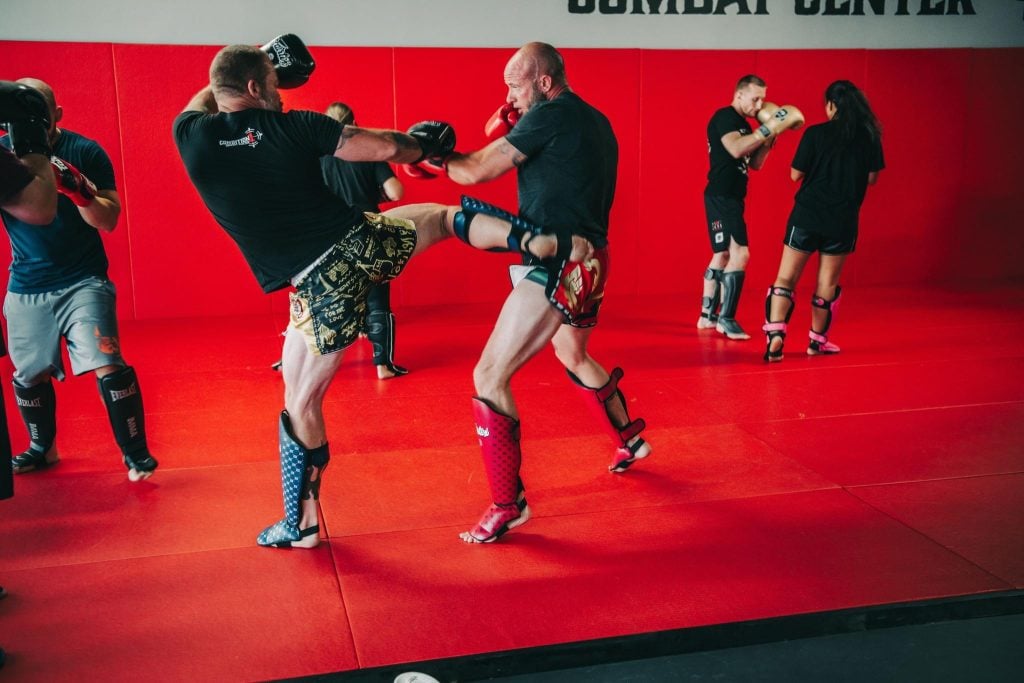
Faster learning, fewer bad habits
Coaches at Condition 1 Combat Center use principles from motor learning that have stood the test of time. Deliberate practice beats casual repetition. You need specific goals, tight feedback, and the right level of challenge. Private lessons supply all three. Interleaving skills can boost retention, but only when you have a base. Early sessions often block practice a key movement to give you a clean groove, then later sessions add variability and decision points.
The science meets practical details. Breathing patterns tie to power and endurance. Students who hold their breath gas out. In a private, a coach can stand close enough to hear it. They cue the exhale on impact, then add shadowboxing rounds with a metronome or the coach’s claps. That correction is hard to catch in a noisy class.
Footwork is similar. If your stance collapses when you pivot, a coach can film a 10-second clip on your phone, draw a line on your heel position, and fix it with one tile on the floor as your landmark. Small props, quick video, instant feedback, and you finally feel what correct feels like.
Safety and longevity are not afterthoughts
Beginners’ martial arts classes should be safe. They are safer when your first exposures are controlled. A private setting lets the coach screen old injuries, test range of motion, and adjust drills on the fly. For a student with a cranky shoulder, the coach might choose clinch frames that avoid internal rotation. If your lower back is sensitive, they will show you how to hip hinge under load, then teach you to bail safely when a position goes wrong, rather than pretend risk does not exist.
For kids, safety includes attention to energy spikes. Some children surge when they get excited. Private time lets the coach teach a reliable stop signal, rehearse it with a game, and then test it in light partner drills. That habit carries back into family martial arts classes and group settings.
Scheduling that respects real life
Spring, Texas families juggle school pickups, work in The Woodlands or along the I-45 corridor, weekend sports, and church. The flexibility of private lessons is often the difference between training and not training. Early morning before the office, a true after-school slot, or weekend martial arts classes built into Saturday plans keep momentum intact. If you travel for work, most coaches at Condition 1 can stack sessions the week before you leave, then give you compact homework to hold gains until you return.
For teens in season with school sports, privates tune volume and exercise selection to avoid overloading the same joints. A wrestler in February needs a different plan than a basketball guard in playoffs. Individual sessions give you that precision without asking the entire class to adapt.
Cost, value, and options without the sales pitch
People often ask about price. Rates vary by coach experience and package length. In the greater Houston area, private martial arts classes typically range from about 60 to 120 dollars per hour. Condition 1 Fitness sometimes offers semi-private options for pairs or small pods, which bring the per-person rate down while keeping attention high. If budget is tight, one smart pattern is a monthly private to tune technique, paired with two to three group classes per week for reps. Students who follow that plan see steady gains without straining time or money.
It is fair to ask what you get for the extra spend. The honest answer: you buy the shortest path to your next skill milestone and the lowest risk of entrenching bad habits. You also buy flexibility. If you know you are most likely to train when the calendar blocks it, a standing weekly private reduces the chance you drift.
When private sessions are the right first step
Plenty of students thrive by jumping straight into Condition 1 Fitness classes in Spring TX. Others benefit from a few private hours before joining the group. If any of the following describe you or your child, consider starting private, then transitioning into group classes:
- You feel anxious about coordination or prior injuries and want a safe on-ramp.
- You have a tight schedule and can only make odd hours, like Friday late afternoon or early Saturday.
- You learn best with quiet, direct instruction before noise and speed.
- Your child needs clearer structure around listening, transitions, or personal space.
- You are preparing for a specific event, like a belt test or amateur bout, and need targeted prep.
I have also seen families book a few private sessions together. Family martial arts classes are a joy, and a short run of privates can set shared language so parents and kids can practice at home. Two sessions where everyone learns the same three cues turns the living room into a low-key training space without chaos.
Integrating with group training for maximum return
Condition 1 Combat Center runs a full slate of local martial arts classes, with options for kids, teens, and adults. The smartest path is not either-or. It is both, in the right ratio for your goals. A brand-new beginner might take one private a week for three to six weeks, then reduce to monthly while committing to two group sessions weekly. A competitor may flip that during camp, stacking two privates for game-plan drilling and using group classes for conditioning and broad looks.
The key is to decide ahead of time how you will measure progress. Pick two or three metrics. For a striker, it might be keeping the rear heel down on the cross, landing one clean jab per round in sparring, and exiting on angle half the time. For a grappler, hold posture in closed guard for a minute, complete one technical stand-up without a knee touch, and hit the same guard pass twice in live rounds. Bring those metrics to your coach in private, then test them in class. The cycle prevents vague goals and fuzzy results.
Specific gains you can expect, with realistic timelines
No coach can promise a belt or a fight win on command. What they can outline are probable gains with consistent effort.
Over three to five private sessions, most beginners clean up stance and guard, connect breath to movement, and learn to recover when they get lost. That alone cuts injury risk and boosts confidence.
In six to ten sessions, expect one offensive lane to emerge. Maybe your jab becomes honest and your low kick lands without telegraph. Maybe your guard retention improves and you start threatening a simple triangle. The goal is not a hundred techniques. It is one or two roads you can drive under light pressure.
Beyond ten sessions, privates tend to widen outcomes. Some students build a compact game that suits their frame. Others chase a specific skill, like clinch entries or takedown defense. At this stage, video review and focused sparring rounds inside Condition 1 Fitness classes make the biggest difference. You learn to read patterns, not just perform moves.
Competitors, hobbyists, and everyone in between
If you are chasing medals or an amateur bout, private time is where your coach builds the game plan. You can run A-B-C sequences for your best entries and learn to shift to plan B when an opponent shuts off your first look. You can also pace your taper, cutting volume the right way in the final week. Details like rehydration plans and warm-up timing matter on fight day. A coach who knows your rhythms from private sessions will steer that well.
For hobbyists who want fitness plus skill, privates keep you honest without turning your life upside down. I have seen parents in their fifties choose one private every other week and two group classes. They get stronger, move with more confidence, and do not miss work because of preventable tweaks. If that is you, tell your coach up front. They will tailor intensity and homework to keep this sustainable.
For kids, the benefits often spill past the mats. Clear goals, a respectful tone, and immediate feedback are transferable skills. When a child learns to breathe, adjust their stance, and try again after a mistake, they are rehearsing how to handle math problems and playground conflict. Private sessions give them reps in that pattern, without the peer pressure that can derail learning.
Addressing common concerns before you start
New students sometimes worry that privates will be awkward or too intense. Good coaching solves both. Expect conversational instruction, not drill sergeant vibes. You will sweat, but the intensity matches your current capacity. If anything feels off, say so. The coach is there to help your brain and body link up, not to impress anyone with how hard they can push you.
Another concern is skill transfer. People ask, Will I freeze in a group after training alone? The opposite is usually true. With a foundation set, you free up cognitive bandwidth. You can pay attention to timing and distance rather than panicking over hand position. The private hours buy calm that shows up when the room gets loud.
Finally, students ask whether private time will isolate them from the community. At Condition 1, the culture is friendly and open. Coaches encourage you to mix in with group classes as soon as you are ready. Privates are a bridge, not a bubble.
How to prepare for your first private lesson
A little forethought makes the first session far more productive. Treat it like a focused meeting with your future self.
- Write your top two goals on your phone, not ten. Skill follows clarity.
- Bring water, a small towel, and any gear you already own. The gym can loan missing pieces.
- Eat a light snack an hour beforehand. Training fasted or stuffed both feel lousy.
- Show up five minutes early and mention any injuries right away.
- Expect to learn one or two things well, not everything at once.
If you are scheduling for a child, add a quick chat with the coach before class. Share what motivates your kid, any triggers to avoid, and what success would look like after a month. That context lets the coach tailor the tone and the games.

Affordable pathways for different households
The phrase affordable martial arts classes means different things to different families. Condition 1 offers a range, from group options to semi-privates to punch cards that reduce per-session cost. Some students start https://raymondjyly006.readspirex.com/posts/stronger-at-any-age-in-spring-tx-condition1combat.com-adult-martial-arts-training with a trial private at a modest introductory rate, then decide whether to commit. Others split a semi-private with a friend so both get attention and accountability. If you are price sensitive, be direct. A good gym appreciates honesty and will guide you toward a plan that sticks.
Be wary of false economies. Saving twenty dollars but spending three months cementing bad habits is not a bargain. On the other hand, paying top dollar without showing up between privates also wastes money. The sweet spot is a plan you can afford that you will actually follow.
Connection to the broader Condition 1 program
Condition 1 Fitness classes in Spring TX exist inside a full-service training environment at Condition 1 Combat Center. That means your private coach can coordinate with group instructors, so cues and themes line up. It also means you can access open mat times, occasional workshops, and seasonal programs. If you train striking and want to sample grappling, or vice versa, a private session is the safest way to cross over.
Students who live nearby often check condition1combat.com for schedules and booking. If you prefer a human voice, stop by the front desk before or after a class and ask for private availability. The team can match you with a coach who fits your goals and schedule.
A note for people returning after a layoff
If you trained years ago and want to come back, private lessons help you respect both memory and reality. Your brain remembers combinations your body is not ready to express yet. A coach will rebuild base strength in the specific ranges you need and will help you let go of habits that no longer serve your current frame. Two to four privates, then a steady diet of group classes, is often enough to shake off the rust without flaring old injuries.
The long game, measured and enjoyable
Longevity in martial arts comes from stacking small wins. Private sessions give you leverage on those wins. You learn a cleaner jab today, which protects your shoulder this month, which lets you keep training next year. You improve your hip hinge now, which saves your back when you lift luggage, which keeps you playful with your kids. These are not abstract benefits. I have watched them change students’ lives, quietly and reliably.
If you search for Condition 1 Fitness classes in Spring TX because you want meaningful progress, consider adding private instruction to your plan. Whether you are a beginner who needs a safe start, a parent hoping to build focus in your child, or a competitor tuning the last five percent, one-to-one coaching makes the hours you invest return more. When you are ready, reach out through condition1combat.com, schedule a session, and give yourself the advantage of attention. Then carry that clarity into the room, where the community and the work turn effort into skill.